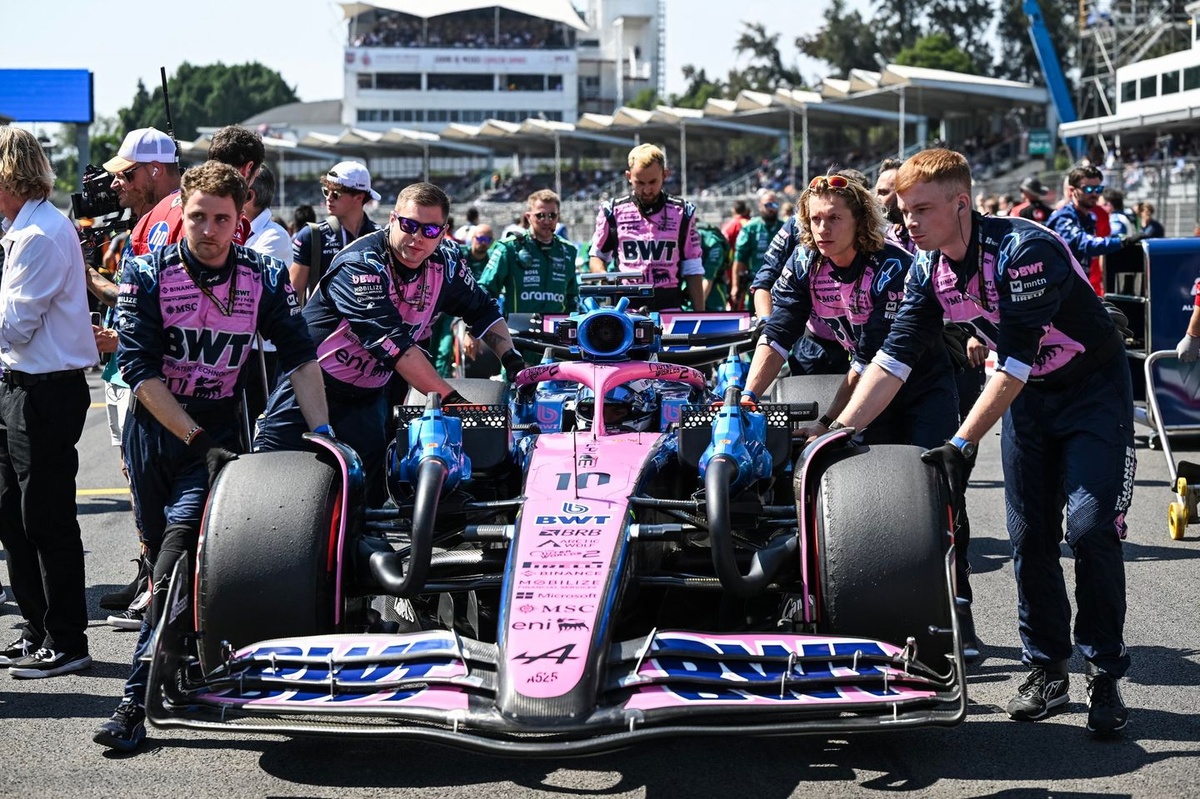
Alpine's Current Realities: A Season of Acceptance for Pierre Gasly
The 2024 Formula 1 season has proven to be a sobering reality check for Alpine. Once a midfield contender with aspirations of challenging the top teams, the French outfit has found itself firmly rooted at the back of the pack. Amidst this challenging period, driver Pierre Gasly has emerged as a voice of pragmatic honesty, openly acknowledging the team's struggles while steadfastly maintaining a vision for a brighter future.
In a sport where optimism often masks underlying issues, Gasly's recent statements about the team's performance have been remarkably candid. He's accepted the 'defeat' of the current situation, recognizing that the car's performance plateaued early in the season and is unlikely to see significant improvement before the year's end. "The reality of it is the car has been the same since Barcelona and will remain the same until the end of the year," Gasly explained, painting a clear picture of the stagnation that has plagued their Pierre Gasly on Alpine's Challenging F1 Season: Accepting Reality.
This admission offers a unique insight into Gasly's Grand Prix season (gasly gp temporada). Rather than dwelling on the immediate disappointments, his focus has sharply shifted towards understanding the strategic decisions shaping Alpine's long-term trajectory. For fans closely following the competitive landscape of Formula 1, Gasly's measured response highlights the immense pressure and the critical thinking required to navigate a season where immediate results are elusive.
The team's current position is not, according to Gasly, a reflection of a lack of effort. "It doesn't mean we are doing a bad job at the track or back at the factory. We just haven't been able to produce a car, in a season where the midfield is extremely tight." This nuance is crucial; it points to the brutally competitive nature of modern F1, where even a slight deficit in performance can relegate a team from the mid-table to the very back. For Alpine, this has meant an unenviable struggle for points and a difficult path forward in 2024.
The Long Game: Why 2026 is Alpine's True Target
While the present may be bleak for Alpine, the team's gaze is firmly fixed on the horizon, specifically the radical regulatory changes slated for 2026. This long-term strategic play underpins Gasly's surprising contentment despite the current lack of competitive pace. The upcoming regulations promise a significant overhaul of both power unit and chassis design, essentially leveling the playing field and offering every team a fresh slate to gain a competitive advantage.
A significant factor in this future-proofing strategy is the arrival of Steve Nielsen, a highly respected figure in Formula 1 with a proven track record in operational excellence. Nielsen is set to join Alpine in September, and Gasly himself has highlighted the timeline for his impact: "Steve [Nielsen] will arrive in September, and I think his impact and his work will be mainly seen in 2026 and beyond. Honestly, Steve's got to focus on next year. We know all the work that we are putting into 2026." This indicates a clear plan to leverage Nielsen's expertise in restructuring and optimizing the team's technical and operational frameworks specifically for the new era.
For teams like Alpine, dedicating significant resources to 2026 now is a calculated risk. It means accepting a period of underperformance in the interim years (2024-2025) but with the hope of leapfrogging competitors when the new rules come into effect. This strategic sacrifice demonstrates an understanding of F1's cyclical nature – success often follows periods of intense, foundational development.
The Engine Factor: Speculation and Strategic Advantage
Adding another layer to Alpine's 2026 strategy is the intriguing prospect of a change in engine supplier. While the reference context only hints at it, Gasly's mention of "decisions we've made for '26" potentially alludes to a switch to a Mercedes engine. This would be a monumental shift for a team that currently designs and builds its own power units under the Renault brand.
A move to a customer engine could have profound implications. On one hand, it frees up significant internal resources and budget that are currently allocated to engine development, allowing Alpine to focus solely on chassis design and aerodynamics – often considered the differentiators in modern F1. Partnering with a proven engine manufacturer like Mercedes, who have consistently produced top-tier power units, could provide an instant performance uplift and reliability advantage.
However, it also means losing the autonomy of being a works team, becoming reliant on another manufacturer's development cycle and priorities. This is a complex strategic decision, weighing the benefits of guaranteed performance against the potential loss of control. If confirmed, this pivot would underscore Alpine's commitment to prioritizing race wins and podiums in 2026, even if it means foregoing the prestige of being a fully independent constructor.
Pierre Gasly's Mindset: Patience, Belief, and Calculated Risks
Perhaps the most striking aspect of Alpine's current situation is Pierre Gasly's personal outlook. Despite the team's struggles, his optimism for the future remains unwavering. "I'm confident. I believe in the team and the fact that they'll be able to give me a competitive car next year," he stated, showcasing his faith in the people and processes behind the scenes. This resilience and belief are crucial for a team navigating such a challenging phase.
Gasly's philosophy regarding the 2024-2025 seasons is particularly insightful. He articulated a clear, almost ruthless, understanding of where Alpine stands: "With the decisions we've made for '26, we haven't been able to provide enough performance to fight for better than that. Which is fine because at the end of the day, whether you finish ninth or eighth or tenth in the championship, you're still fighting for nothing pretty much. But if it gives you a car that can fight for race wins, podiums, top five next season, I'll take that every day of the week." This statement encapsulates the strategic gamble Alpine is making.
For Gasly, the immediate glory of a few extra points or positions in a development-constrained car pales in comparison to the potential for genuine contention for victories. This long-term perspective is a hallmark of seasoned F1 drivers who understand the bigger picture beyond individual race results. It demonstrates his maturity and commitment to Alpine's ambitious vision, making him a pivotal figure in their transitional phase. For more on his enduring hope, read Gasly Confident in Alpine's Future Car Despite 2024 Performance Woes.
Navigating the Ultra-Competitive F1 Midfield
Gasly's observation about the "midfield being extremely tight" is not an exaggeration. Modern Formula 1 is more competitive than ever, especially from the mid-pack downwards. The differences between P7 and P17 can often be measured in mere tenths of a second, meaning that even a minor performance deficit can have significant implications for grid position and, critically, championship points.
For teams like Alpine, this tight competition means that any car development stagnation immediately translates to falling down the pecking order. The financial implications are also considerable. Higher championship positions mean more prize money, better sponsorship opportunities, and greater prestige, all of which fuel further development. To intentionally slow down immediate development in favor of a future ruleset is therefore a bold and risky move, one that requires significant conviction and backing from the highest levels of the organization.
Practical Tip for F1 Enthusiasts: When evaluating a team's performance, it's crucial to look beyond current results and consider the broader context of technical regulations and long-term strategic goals. What might seem like a disastrous season could, for some teams, be a calculated investment in future glory.
What This Means for Alpine and Gasly's Future
Alpine's 2024 F1 strategy, largely driven by Gasly's insights, is a clear signal of their commitment to the 2026 regulations. It's a high-stakes gamble, but one that many in F1 believe is necessary to break free from the midfield pack and truly challenge for top honors. For Pierre Gasly, it means enduring a challenging gasly gp temporada (Grand Prix season) in the short term, but with the tantalizing promise of a car capable of fighting for wins in the near future.
His role in this transition is critical. As an experienced driver, his feedback will be invaluable in guiding the development of the 2026 car. His leadership and ability to maintain team morale despite adversity will also be key. If Alpine's gamble pays off, Gasly could find himself at the forefront of a revitalized team, finally having the machinery to consistently compete for podiums and race victories – the very reason he embraces the current difficulties.
Conclusion
Alpine's 2024 F1 strategy, championed by Pierre Gasly, is a compelling narrative of sacrifice for future gain. While the current Grand Prix season (gasly gp temporada) presents significant challenges and requires a pragmatic acceptance of their competitive standing, the team's unwavering focus on the 2026 regulatory overhaul offers a beacon of hope. With strategic leadership changes and a potential pivot in engine supply, Alpine is positioning itself to capitalize on the reset button of Formula 1's new technical era. Pierre Gasly's patience, belief in the team, and his candid assessment of the long game underscore a mature understanding of what it takes to succeed at the pinnacle of motorsport. Fans will be watching with keen interest to see if this calculated risk ultimately delivers the race wins he so eagerly anticipates.